
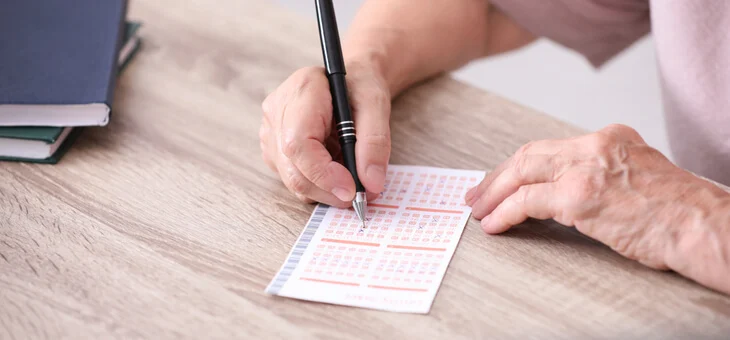

The allure of the lottery is deeply rooted in human psychology. The concept of risking a microscopic amount of money for the chance to secure generational wealth is a universally captivating proposition. For major multi-state drawings like Powerball and Mega Millions, jackpots regularly climb into hundreds of millions, or even billions, of dollars. When these massive numbers hit the headlines, ticket sales spike dramatically as millions of casual players rush to participate.
Because the human brain struggles to comprehend extreme mathematical probabilities, a vast ecosystem of misconceptions, urban legends, and outright superstitions has developed around the game. Many players routinely make purchasing decisions based on flawed logic, believing they have discovered a secret loophole to bend the odds in their favor. To approach the lottery responsibly and realistically, you must dismantle the most persistent myths that continue to fool players.
The Gamblers Fallacy and the Illusion of Due Numbers
Perhaps the most widespread misconception in the lottery world relates to the tracking of past winning numbers. Many players meticulously analyze historical drawing data, sorting numbers into distinct categories.
The Myth of Cold Numbers
This approach leads players to look for cold numbers, which are specific digits that have not been drawn for a prolonged period. The underlying theory is that because every number must eventually appear over a long enough timeline, a number that has been absent for weeks or months is due to be drawn soon. Players tracking these numbers will stack their tickets with these cold digits, confident that the laws of averages are working in their favor.
The Reality of Independent Events
This strategy falls apart because it relies on the gambler’s fallacy, which is the incorrect belief that past random events can influence the probability of future random events. A standard lottery drawing is a series of completely independent trials.
When the plastic balls bounce around in a modern drawing machine, the mechanical system has no memory. It cannot register that the number 17 has not been picked for three months. Every single drawing represents a total reset. The probability of any specific number being drawn remains identical to what it was in the previous drawing and what it will be in the next one.
The Quick Pick vs Self-Selected Numbers Debate
When buying a lottery ticket, players face a baseline choice: manually select their own numbers or let the computer terminal generate a random assortment via a quick pick. This choice has sparked a multi-decade debate, with passionate players arguing that one method holds a distinct mathematical advantage over the other.
The Misconception of Human Intuition
Many people harbor a deep distrust of computer-generated numbers, believing the terminal creates patterns that are easy for the lottery system to avoid during the official drawing. Others believe that utilizing deeply personal numbers, such as family birthdays, wedding anniversaries, or lucky digits, introduces a form of organic luck or cosmic alignment that a machine cannot replicate.
The Reality of Aggregate Data
From a pure probability standpoint, the mechanical drawing equipment cannot distinguish between a set of numbers picked by a computer and a set of numbers handwritten on a playslip. Your odds of winning the jackpot are exactly the same with either method.
Statistical data shows that roughly 70% to 80% of actual lottery jackpot winners utilized quick picks. This statistic does not mean the quick pick option is mathematically superior. It simply reflects the fact that the vast majority of all tickets purchased are quick picks. If 80% of all players use the random machine generator, it is a mathematical certainty that roughly 80% of the winning tickets will come from that pool.
The Hidden Trap of Using Birthdays and Anniversaries
While choosing your own numbers does not reduce your mathematical odds of winning, the common method people use to select those numbers can drastically lower their potential financial payout.
The overwhelming majority of players who self-select numbers rely on significant calendar dates. Because months only run from 1 to 12 and days only run from 1 to 31, these players completely restrict their selections to a narrow band of low numbers.
Major lotteries require players to select numbers from a much wider field. For instance, Powerball requires picking numbers up to 69, while Mega Millions goes up to 70. By limiting your choices to 31 or lower, you are not altering the likelihood of your numbers hitting, but you are creating a massive strategic vulnerability.
If the winning numbers happen to fall entirely under 31, the odds are incredibly high that hundreds, or even thousands, of other players used similar birthday combinations. When multiple tickets match the winning numbers, the jackpot must be split equally among all winners. Selecting numbers above 31 minimizes the statistical likelihood of sharing your prize with other players if you manage to beat the odds.
The Misunderstanding of Small-Town and Big-Retailer Luck
News broadcasts frequently highlight specific retail locations that have sold multiple jackpot-winning tickets over the years. These locations often earn reputations as lucky stores, prompting players to drive long distances out of their way just to purchase their tickets from that specific counter. A similar phenomenon occurs when a sequence of winners emerges from a specific state or small geographic region.
This concept completely ignores the scale of ticket volume. A store located at a massive transit hub or an incredibly busy state border sells tens of thousands of tickets every single day, while a quiet rural convenience store might sell only a few dozen.
The busy location acts as a giant vacuum for probability. Because it processes an immense volume of transactions, it naturally has a much higher statistical probability of selling a winning ticket over time. The store itself holds no special energetic pull or mechanical advantage. Buying a ticket from a high-volume retailer gives you the exact same individual odds as buying a ticket from an isolated gas station in the middle of nowhere.
Buying More Tickets and the Reality of Scalability
A standard piece of advice among casual players is that the easiest way to increase your chances of winning is to buy more tickets. While this statement is technically true in a strict linear sense, it creates a false impression of practical scalability.
If you purchase a single ticket for a major multi-state lottery, your odds of winning the jackpot are roughly 1 in 300 million. If you spend more money and purchase ten tickets with completely different number combinations, your odds improve to 10 in 300 million.
While you have technically multiplied your chances by ten, from a practical standpoint, your probability of winning remains virtually indistinguishable from zero. To move the statistical needle in a meaningful way, you would need to buy millions of unique tickets, an endeavor that requires immense capital and logistical infrastructure, far outweighing the expected value of the prize.
Frequently Asked Questions
Does the lottery jackpot payout change depending on whether I buy my ticket early in the week or right before the drawing?
No, the timing of your ticket purchase has absolutely zero impact on the drawing outcome or the final payout structure. The lottery system tallies all valid wagers across the country up until the official sales cutoff time. Every single ticket entered into the database before that deadline is equal, regardless of whether it was printed days in advance or seconds before the window closed.
Are scratch-off lottery tickets completely random, or can you track patterns in the printing ink?
Modern scratch-off tickets are designed using highly sophisticated cryptographic algorithms that ensure total randomness in the distribution of winning cards across print runs. There are no visual defects, ink patterns, or serial number sequences that a consumer can identify to determine if a ticket is a winner before scratching the latex coating away. The only verifiable data available is the remaining prize pool chart updated on official state lottery websites.
If a jackpot rolls over multiple times, do my odds of winning increase because there is more money in the pool?
No, your individual odds of winning a drawing are based entirely on the mathematical matrix of the game, which is the total number of ball combinations available. The size of the cash pool changes based on ticket sales and rollovers, but the number of potential combinations remains fixed. A two billion dollar jackpot features the exact same odds of winning as a twenty million dollar jackpot.
Is it legally possible for a non-US citizen to win and claim a major US lottery jackpot?
Yes, you do not need to be a US citizen or a permanent resident to purchase a ticket or legally claim a lottery prize in the United States, provided the ticket was purchased legally within a participating state. However, non-resident winners are subject to different tax withholding rates. Federal taxes for non-US residents are automatically deducted at a higher flat rate, and state taxes apply based on where the ticket was processed.
Why do consecutive number sequences like one, two, three, four, five, and six seem to never win the lottery?
A consecutive sequence like 1-2-3-4-5-6 has the exact same mathematical probability of being drawn as any other specific mix of six numbers. The reason you never see it appear is due to the sheer number of non-consecutive combinations. Out of hundreds of millions of possibilities, there are only a handful of purely consecutive sequences. While the sequence itself is not cursed, thousands of people actually play it every week as a joke, meaning if it ever did hit, the payout per person would be minuscule.
Can a state lottery choose to withhold a jackpot payout if too many people win the top prize simultaneously?
No, the state lottery cannot withhold a payout, but the rules dictate how the money is distributed. For fixed lower-tier prizes, such as matching three or four numbers, lotteries have liability caps. If an highly unusual event occurs where an astronomical number of players win a fixed prize, the game rules allow the lottery to convert those fixed payouts into a pari-mutuel structure, meaning the total prize pool for that tier is divided equally among all the winners.